How to Build Client Loyalty: The Complete Guide for Service Businesses
 ·25 April 2026
How to Build Client Loyalty: The Complete Guide for Service Businesses
Client loyalty is not built with one discount, one friendly message, or one good appointment. It is built through repeated moments where the client feels understood, remembered, respected, and confident enough to come back.
For service businesses in Luxembourg, this matters a lot. Salons, wellness studios, consultants, clinics, personal trainers, beauty businesses, and local service providers often rely on repeat clients more than one-off bookings. A full calendar is good. A full calendar with loyal clients is better.
The reason is simple: loyal clients are usually easier to serve, more likely to return, more likely to recommend you, and less likely to disappear after one small inconvenience. Bain & Company's well-known retention research found that increasing customer retention by 5% can increase profits by 25% to 95%, depending on the business model. (Bain & Company)
In this complete guide, we will look at how to build client loyalty in a practical way: through customer experience, online booking, reminders, CRM, personalization, follow-ups, deposits, and smart communication.
What Is Client Loyalty?
Client loyalty means that people repeatedly choose your business, even when they have other options.
It is not just about liking your brand. It is about trust. A loyal client believes that booking with you is easy, the service will be reliable, communication will be clear, and the experience will be worth their time and money.
For a local service business, client loyalty can show up in several ways:
- A client books again without needing to be convinced
- A client recommends you to friends or colleagues
- A client chooses your business even when another provider is cheaper
- A client is more forgiving when small issues happen
- A client follows your advice, buys add-ons, or joins a recurring plan
That is why loyalty is more than marketing. It is an operating system for the whole client experience.
Why Client Loyalty Matters for Luxembourg Service Businesses
Luxembourg has a strong SME economy. The Luxembourg government defines SMEs as businesses with fewer than 250 employees and turnover under €50 million or a balance sheet below €43 million. (Guichet.lu)
For many of these businesses, growth does not only come from more traffic or more followers. It comes from keeping existing clients active.
This is especially true for appointment-based businesses. If a client visits once but never returns, you constantly need to replace them. That means more advertising, more sales effort, more admin, and more uncertainty.
Client loyalty helps reduce that pressure.
A loyal client base can create more predictable revenue. It can also reduce empty slots, improve word-of-mouth, and make the business less dependent on last-minute promotions.
There is also a customer experience risk. PwC's 2025 Customer Experience Survey found that 52% of consumers said they stopped using or buying from a brand because of a bad product or service experience, while 29% stopped because of poor customer experience online or in person. (PwC)
For a service business, that "bad experience" does not have to be dramatic. It can be a forgotten appointment confirmation, a confusing booking process, a late reply, a missing reminder, or a client feeling like they have to repeat the same information every time.
How to Build Client Loyalty: Start With the Booking Experience
The client journey often starts before the appointment. It starts when someone tries to book.
If booking is slow, unclear, or dependent on manual back-and-forth messages, the relationship starts with friction. A potential client might still book once, but loyalty becomes harder to build.
Make Booking Simple
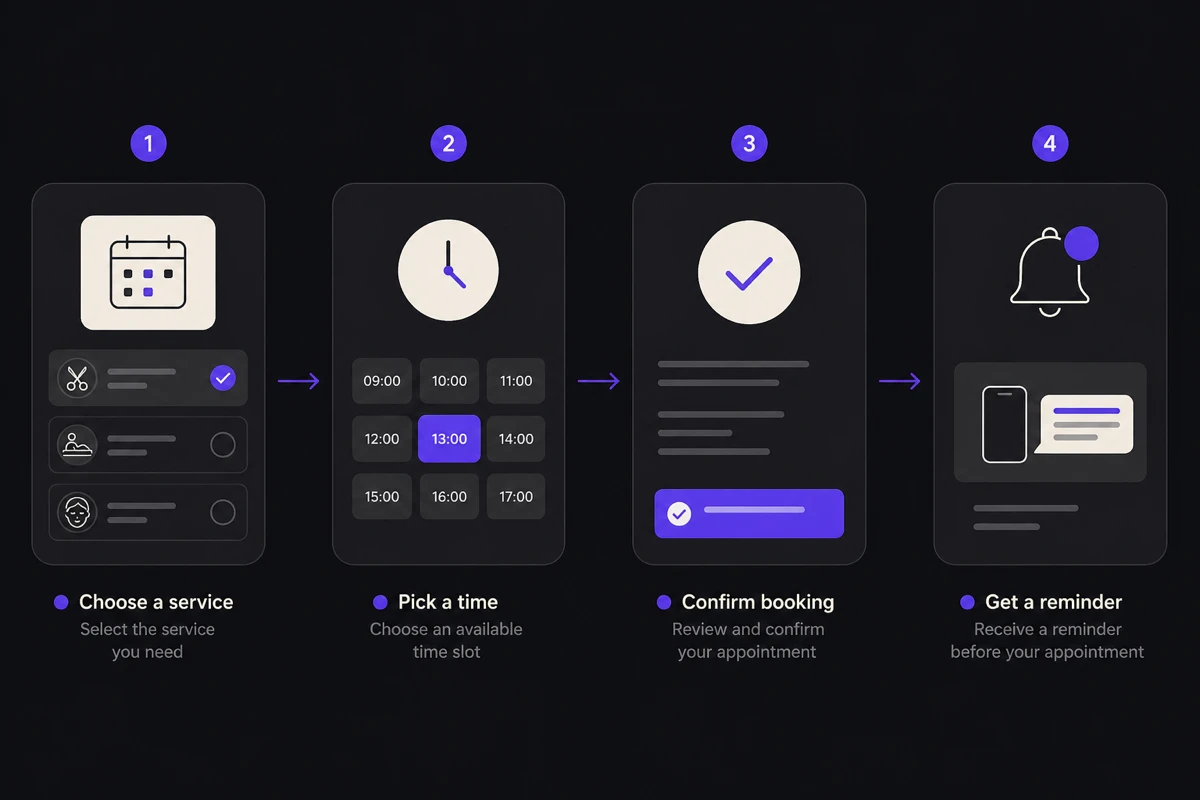
A strong booking process should make it easy to:
- Choose a service
- See available time slots
- Understand pricing or deposit rules
- Receive confirmation immediately
- Reschedule or cancel without stress
- Get reminders automatically
This is where online booking software can directly support client loyalty. The client does not need to wait for a reply. The business does not need to manually confirm every appointment. Both sides save time.
For service businesses, this also creates a more premium feeling. A clean booking flow tells the client: this business is organized.
Reduce Uncertainty
Clients want to know what happens next. After they book, they should receive a clear confirmation with the date, time, location, service, price information, cancellation policy, and any preparation instructions.
Small details matter. For example, a beauty salon could include "Please arrive 5 minutes early." A consultant could include "You will receive the meeting link by email." A wellness studio could include "Bring comfortable clothing."
These messages reduce confusion and make the business feel more professional.
Use Reminders to Protect the Relationship
No-shows are not always caused by bad clients. Many missed appointments happen because people forget, get busy, or lose track of time.
Automated reminders help solve this without awkward manual follow-ups. Research in healthcare settings has repeatedly found that appointment reminders can reduce missed appointments. A systematic review by McLean et al. found strong evidence that reminder systems reduce non-attendance across different appointment contexts. (Patient Preference and Adherence)
Even though many studies focus on healthcare, the principle applies to appointment-based service businesses: timely communication keeps the appointment visible.
Good Reminder Timing
A useful reminder setup could look like this:
- One reminder 48 hours before the appointment
- One reminder 24 hours before the appointment
- One short reminder on the day of the appointment
The goal is not to annoy the client. The goal is to make attending easy.
Allow Easy Rescheduling
A reminder is more powerful when the client can act on it. If someone cannot attend, they should be able to reschedule quickly.
This is important for loyalty. A client who can easily reschedule is less likely to disappear. A business that fills the freed slot with another client loses less revenue.
Build a Client Memory With CRM
One of the strongest ways to build client loyalty is to remember clients properly.
This does not mean pretending to know everything about them. It means keeping useful, respectful information that improves the service.
A CRM helps you store details such as:
- Previous appointments
- Preferred services
- Notes from past visits
- Birthdays or important dates, if relevant
- Preferred communication channel
- Outstanding payments or deposits
- Follow-up history
Salesforce's State of the AI Connected Customer report notes that personalization and value exchange are increasingly important in customer relationships, with customers expecting brands to treat them as individuals while still respecting privacy. (Salesforce)
For a small business, personalization can be simple. A hair salon might remember a client's preferred color formula. A fitness coach might remember a client's injury history. A consultant might remember the client's business goals. A beauty studio might remember product sensitivities.
The result is that clients do not feel like strangers every time they return.
Personalize Without Being Intrusive
Personalization should feel helpful, not invasive.
Good personalization sounds like:
- "Would you like to rebook the same treatment as last time?"
- "Your usual time slot is available next Thursday."
- "We used this product during your last appointment. Would you like the same again?"
- "It has been six weeks since your last visit. Would you like to book your next appointment?"
Bad personalization feels too aggressive or too personal.
The difference is context. Use client data to improve the service, not to pressure the client.
This is also important for trust. Clients are more likely to accept personalization when it clearly benefits them and when the business handles their data responsibly.
Create a Follow-Up System
Many service businesses lose loyalty after the appointment because they stop communicating.
The client leaves. The service is done. Then nothing happens.
A follow-up system helps maintain the relationship without requiring the business owner to remember everything manually.
Examples of Useful Follow-Ups
- After a haircut: "Thank you for visiting us today. Here are two tips to keep your style fresh."
- After a massage: "We hope you feel relaxed. Drink water today and book your next session when ready."
- After a consultation: "Here is a short summary of what we discussed and the next steps."
- After a beauty treatment: "Here is how to care for your skin over the next 24 hours."
This is not spam. It is service after the service.
A good follow-up can increase trust, reduce questions, and make the next booking feel natural.
Use Deposits and Clear Policies to Build Respect
Client loyalty is not only about being friendly to clients. It is also about building a respectful relationship between the client and the business.
Clear cancellation policies, deposits, and payment rules help protect your time.
For example, if a client books a high-value appointment, a small deposit can reduce unserious bookings. It can also make the client more committed to attending.
The key is transparency. Clients should see the policy before they book, not after.
A strong policy should explain:
- When cancellations are free
- When a fee applies
- Whether deposits are refundable
- How clients can reschedule
- What happens in case of emergencies
This protects the business without damaging trust.
Reward Loyalty in a Way That Fits Your Brand
Client loyalty does not always require a classic points program. For many service businesses, simple recognition works better.
Here are practical loyalty ideas:
- Priority booking for regular clients
- A small birthday offer
- A free add-on after a certain number of visits
- Exclusive early access to new services
- A referral reward
- A personalized rebooking recommendation
- A VIP client list for high-value customers
The best loyalty reward depends on your positioning.
A premium salon may not want heavy discounts because discounts can weaken the brand. Instead, it might offer priority slots, premium samples, or a complimentary treatment upgrade.
A fitness studio might offer a free class after a referral.
A consultant might offer a quarterly check-in for long-term clients.
Loyalty should feel valuable, not cheap.
Measure Client Loyalty With Simple Metrics
You cannot improve what you do not track.
The good news is that loyalty metrics do not need to be complicated. Start with a few simple numbers.
Repeat Booking Rate
How many clients book again within a defined time period? For example, a salon might track how many clients return within eight weeks. A coach might track how many clients renew after the first package.
No-Show Rate
How many appointments are missed without cancellation? This helps you understand whether reminders, deposits, or rescheduling options are working.
Average Client Value
How much does a client spend over time? This helps you understand whether loyalty efforts are increasing long-term revenue.
Referral Rate
How many new clients come from existing clients? Referrals are often a sign that clients trust you enough to recommend you.
Review Rate
How many satisfied clients leave reviews? Reviews can support trust, local visibility, and conversion.
HubSpot's customer service statistics report highlights the importance of customer experience, noting that poor service can discourage customers from buying again. (HubSpot) Tracking loyalty metrics helps you notice problems before clients quietly leave.
Build Loyalty Through Consistency
A client can forgive one small mistake. But repeated inconsistency damages loyalty.
Consistency means:
- Opening hours are accurate
- Available slots are reliable
- Prices are clear
- Reminders arrive on time
- Staff can see client notes
- Follow-ups are not forgotten
- The booking process works on mobile
- Payments and deposits are handled smoothly
This is where all-in-one booking software becomes useful. If your booking system, CRM, reminders, deposits, and POS are disconnected, your team has to connect everything manually. That creates mistakes.
With a connected system, the client experience feels smoother and the business is easier to manage.
Practical Client Loyalty Checklist
Use this checklist to review your current client experience.
- [ ] Can clients book online without messaging you first?
- [ ] Do clients receive instant confirmation?
- [ ] Do reminders go out automatically?
- [ ] Can clients reschedule easily?
- [ ] Do you store client preferences in a CRM?
- [ ] Do you send useful follow-ups after appointments?
- [ ] Do you have a clear cancellation policy?
- [ ] Do you use deposits for high-value or high-risk bookings?
- [ ] Do you track repeat bookings and no-shows?
- [ ] Do loyal clients receive recognition?
- [ ] Do you ask satisfied clients for reviews?
- [ ] Does your team have access to the same client information?
If several answers are "no," you do not necessarily have a loyalty problem. You may have a system problem.
Conclusion: Client Loyalty Is Built by Design
Client loyalty does not happen by accident. It is built through every small interaction before, during, and after the appointment.
For service businesses in Luxembourg, the opportunity is clear: make booking easier, communicate better, remember client preferences, reduce no-shows, follow up professionally, and give people a reason to come back.
The businesses that win loyalty are not always the cheapest. They are often the easiest to trust.
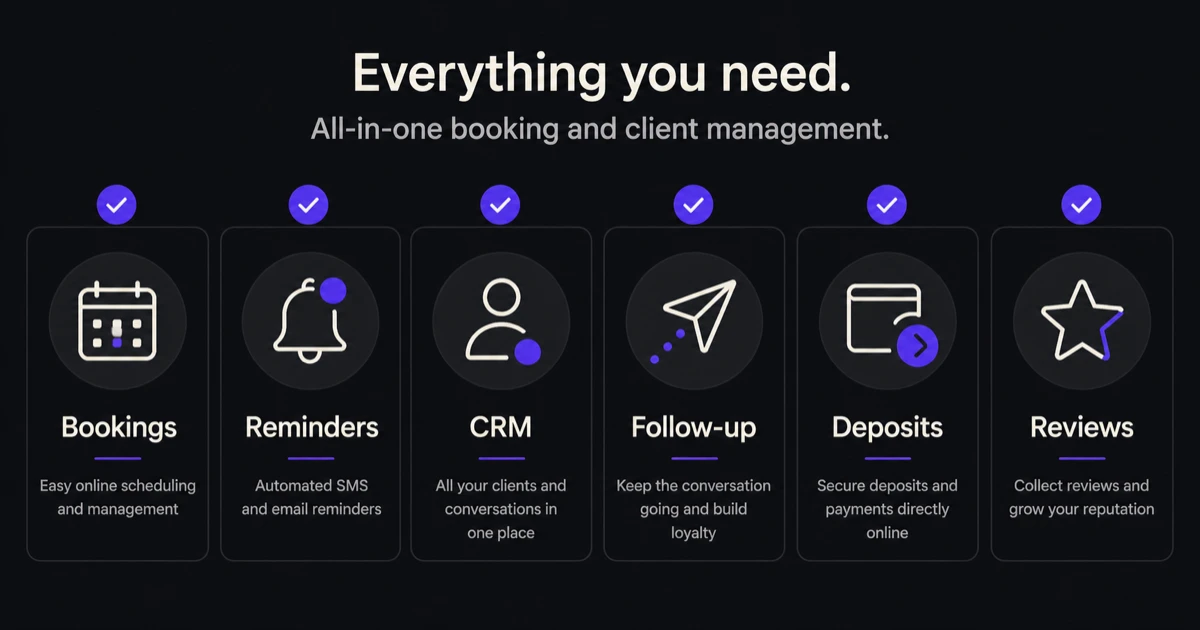
Bookify helps service businesses create that kind of experience with online booking, CRM, reminders, deposits, POS, and client management in one place.
Start your free trial today · Book a consultation
FAQ
What is the best way to build client loyalty?
The best way to build client loyalty is to make every part of the client experience reliable: easy booking, clear communication, reminders, personalized service, useful follow-ups, and consistent quality.
Can online booking software improve client loyalty?
Yes. Online booking software can improve loyalty by making it easier for clients to book, reschedule, receive reminders, and return without friction.
Do reminders really reduce no-shows?
Research on appointment reminder systems shows strong evidence that reminders reduce missed appointments. (Patient Preference and Adherence)
How does CRM help with client loyalty?
A CRM helps businesses remember client preferences, previous visits, notes, and follow-up history. This makes the service feel more personal and professional.
Should service businesses use deposits?
Deposits can be useful for high-value appointments, long services, or businesses with frequent no-shows. The policy should be clear before the client books.
What client loyalty metrics should small businesses track?
Useful metrics include repeat booking rate, no-show rate, average client value, referral rate, and review rate.